Prospects are showing interest. So where are they dropping out?
You may already have enough opportunities entering the business. The problem may be what happens between booking, attendance, qualification, proposal and decision.
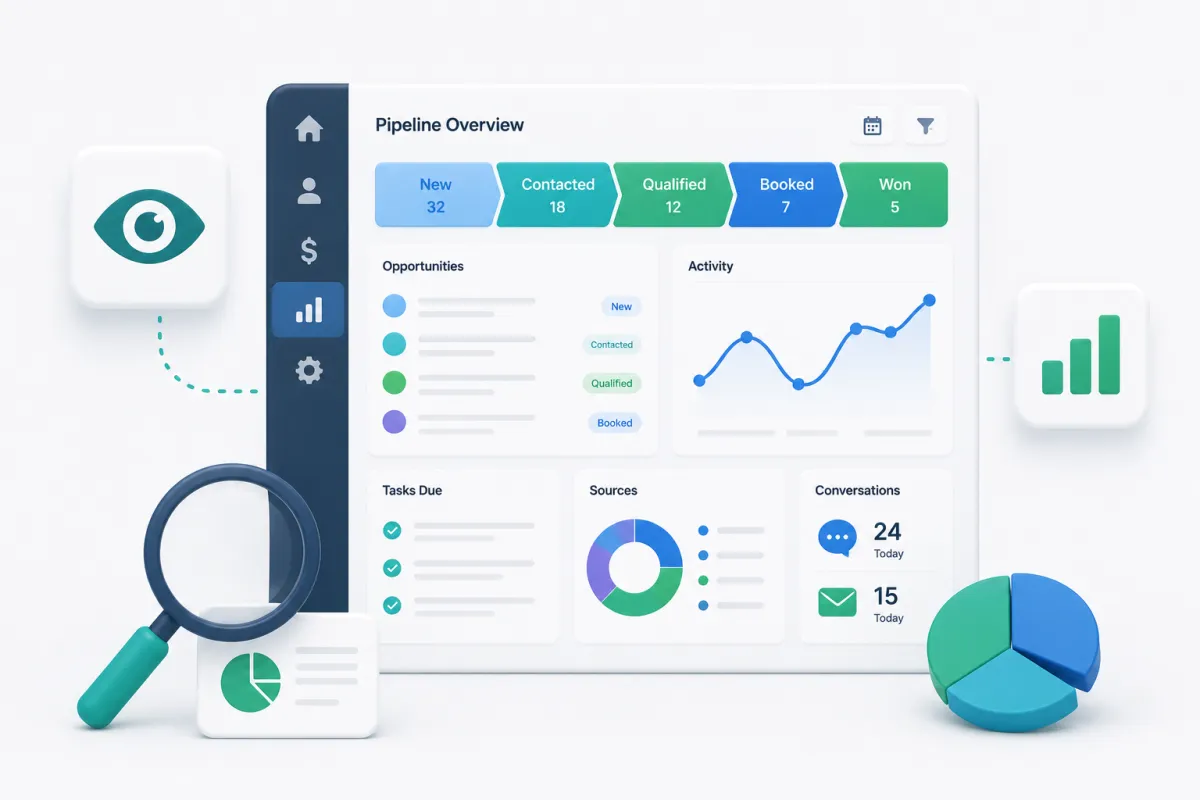
See where real opportunities may be dropping out.
This assessment looks at five parts of your conversion process. Together they show where genuine opportunities are most likely losing momentum.
Booking
Do the right enquiries actually move to a call, meeting or next step?
Attendance
Do booked prospects actually show up for the conversation?
Qualification
Are the right prospects moving forward for the right reasons?
Proposal
How quickly and clearly does the offer reach the prospect?
Decision
Is there a clear process that leads to a yes, no or not now?
Your result includes your primary conversion bottleneck, an estimate of the revenue sitting inside the gap, and the first area worth fixing.
Check your conversion gap.
Answer using a normal month in your business. The point is not to produce a perfect answer. It is to see how the process actually works today.
Booking
How easily does an enquiry move to the next step?
Of the enquiries that are a reasonable fit, how many usually book a call, meeting or next step?
How easy is it for a prospect to take the next step with you?
Attendance
What happens between booking and the actual conversation?
How many booked prospects actually attend their call or meeting?
What happens after someone books?
Qualification
Are the right prospects moving forward for the right reasons?
How consistently do you qualify prospects before recommending your service?
Do you record the prospect's needs, concerns and agreed next step?
Proposal
How quickly and clearly does a qualified prospect receive an offer?
How quickly does a qualified prospect receive a proposal, quote or clear offer?
How clear is the proposal or offer you send?
Decision
What happens after the proposal has been sent?
What happens after you send a proposal or quote?
Can you currently see where every sales opportunity stands?
Put a value on the gap
Use your best estimate. It does not need to be perfect.
You may not need more leads. You may need more of your current prospects to keep moving.
A prospect can look interested and still quietly disappear. They may fail to book, fail to attend, receive a slow or unclear proposal, or sit in the pipeline without a structured decision process.
Fix the movement of opportunities first. Then more lead generation has a much better chance of turning into revenue.
Enquiry
Interest is created.
Booking
The next step is either easy or full of friction.
Attendance
Momentum continues. Or disappears.
Proposal
The offer either creates clarity or confusion.
Decision
Every opportunity needs a visible next action.
Find the first conversion gap worth fixing.
Your result shows where genuine opportunities may be losing momentum before your sales process has a fair chance to work.
Are prospects failing to book?
See whether friction or confusion is slowing momentum too early.
Are booked prospects failing to attend?
Identify whether confirmation and reminder processes need attention.
Is qualification strong enough?
See whether opportunities are moving forward with enough clarity about fit, need and urgency.
Is the proposal stage creating drag?
Spot whether speed, clarity or next-step guidance is slowing decisions.
Are opportunities getting stuck at decision stage?
Know whether silence is being managed properly or simply left hanging.
What could the gap be worth?
Estimate how much potential revenue is sitting inside the current conversion process.
Your Conversion Gap Profile
Here is where your conversion process appears strongest, and where prospects may be dropping out.
Primary conversion gap:
Estimated revenue sitting inside the conversion gap
This calculation compares your current conversion rate with the realistic improved close rate you entered.
Want a copy of your results?
Enter your name and email and we'll send you your Conversion Gap result, estimated revenue gap and recommended next step.
More lead generation can make a weak conversion process more expensive.
RoboLead does not begin with automation. We first decide what should happen, what should disappear, who owns the next step and where technology genuinely helps.
Remove
Remove friction and steps that add no customer value.
Simplify
Make the next step obvious for both the prospect and your team.
Systemise
Give every important stage a clear process, owner and next action.
Automate
Automate repetitive work that still deserves to happen consistently.
Conversion is only one place revenue can get stuck.
Use the diagnostic that matches the next bottleneck you want to investigate.
Lead Leakage
Are enquiries slipping through the cracks? Check whether leads are being lost before they enter a proper sales process.
Follow-Up Gap
Are interested prospects going quiet? See whether genuine opportunities are losing momentum after the first response.
Process Waste
Are you automating work that should disappear? Find repetitive admin, duplicated work and unnecessary handoffs.
Find the gap. Fix the process. Automate what remains.
Start with the numbers and process you already have. The assessment takes about three minutes.